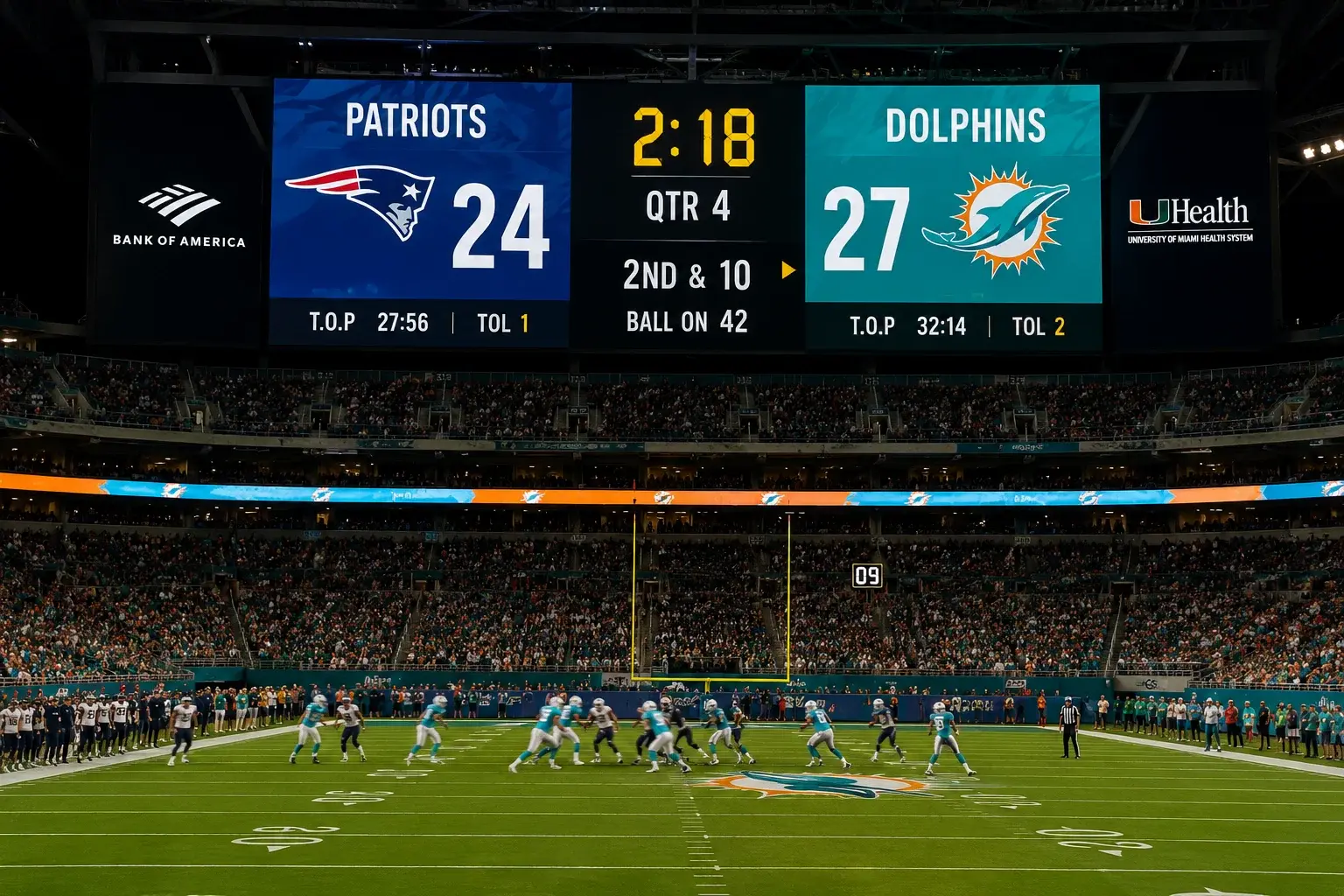

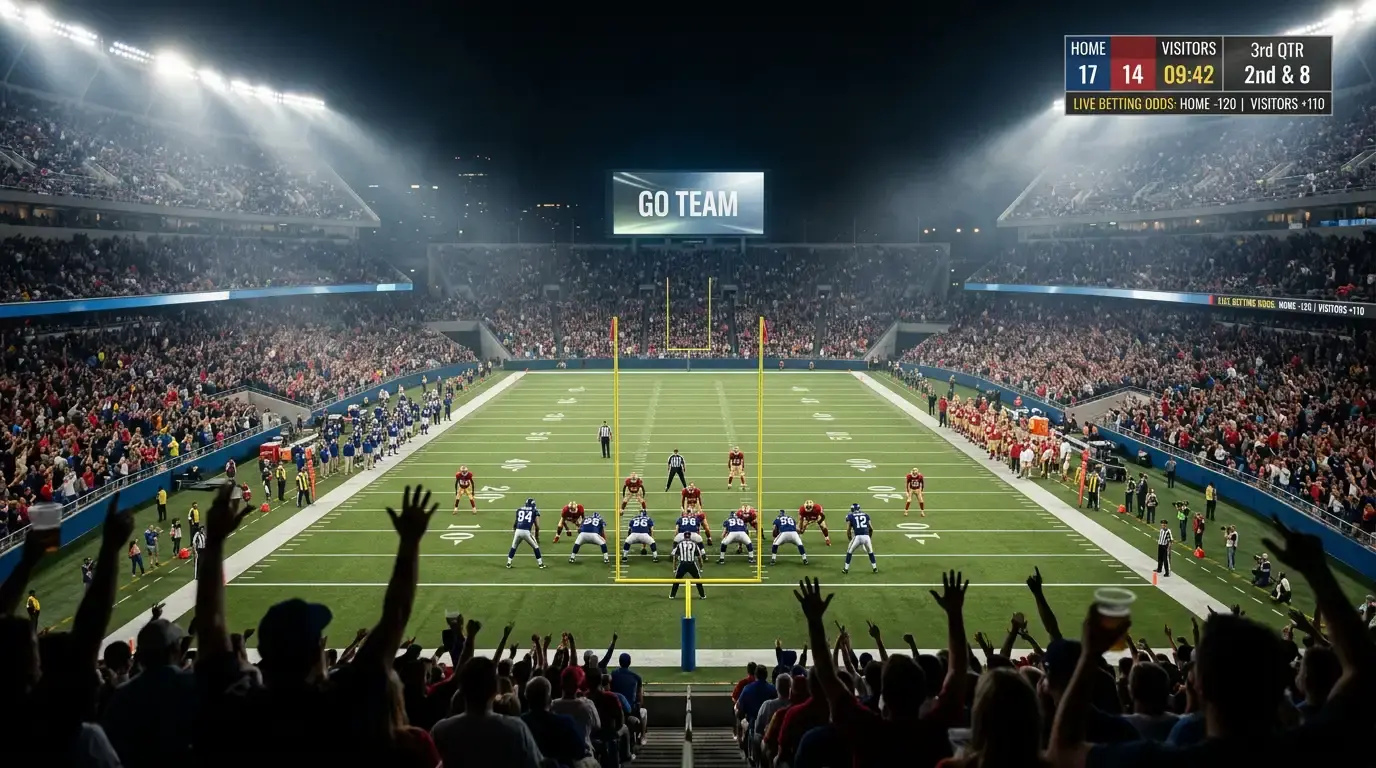
Three minutes into the third quarter of a London game at Tottenham Hotspur Stadium, I watched the in-play moneyline on the trailing team drop from 5/1 to 7/4 in the time it took me to unlock my phone. A sack, a fumble recovery and a short-field touchdown – three plays, and the entire market recalibrated. That is live NFL betting: a rolling argument between what has just happened and what the algorithm thinks happens next. To make the most accurate in-game predictions, it is highly recommended to use NFL live streaming betting sites so you can watch the action unfold.
In-play wagering now accounts for 62.35% of online sports betting revenue globally, growing at a compound annual rate above 13%. In the NFL specifically, the structure of the game – discrete plays, frequent stoppages, measurable yards gained – makes it almost uniquely suited to live markets. Every snap produces new data, and every data point moves the price.
For UK punters, the timing adds another layer. Most NFL games kick off between 6pm and 1:30am British time, which means live betting unfolds across an evening rather than a midday window. That schedule creates opportunities and traps in equal measure. This guide covers both – the markets available, the mechanics of odds movement, the streaming options and the discipline required to trade a four-hour sporting event without bleeding your bankroll dry.
In-Play NFL Markets: Evaluating UK Bookmaker Offers
Not every bookmaker offers the same in-play depth for NFL, and the gap between the best and worst is wider than most punters realise. I have had sessions where one platform offered 40+ live markets on a primetime game while another barely managed 10. Knowing what is available – and where – is the first practical step.
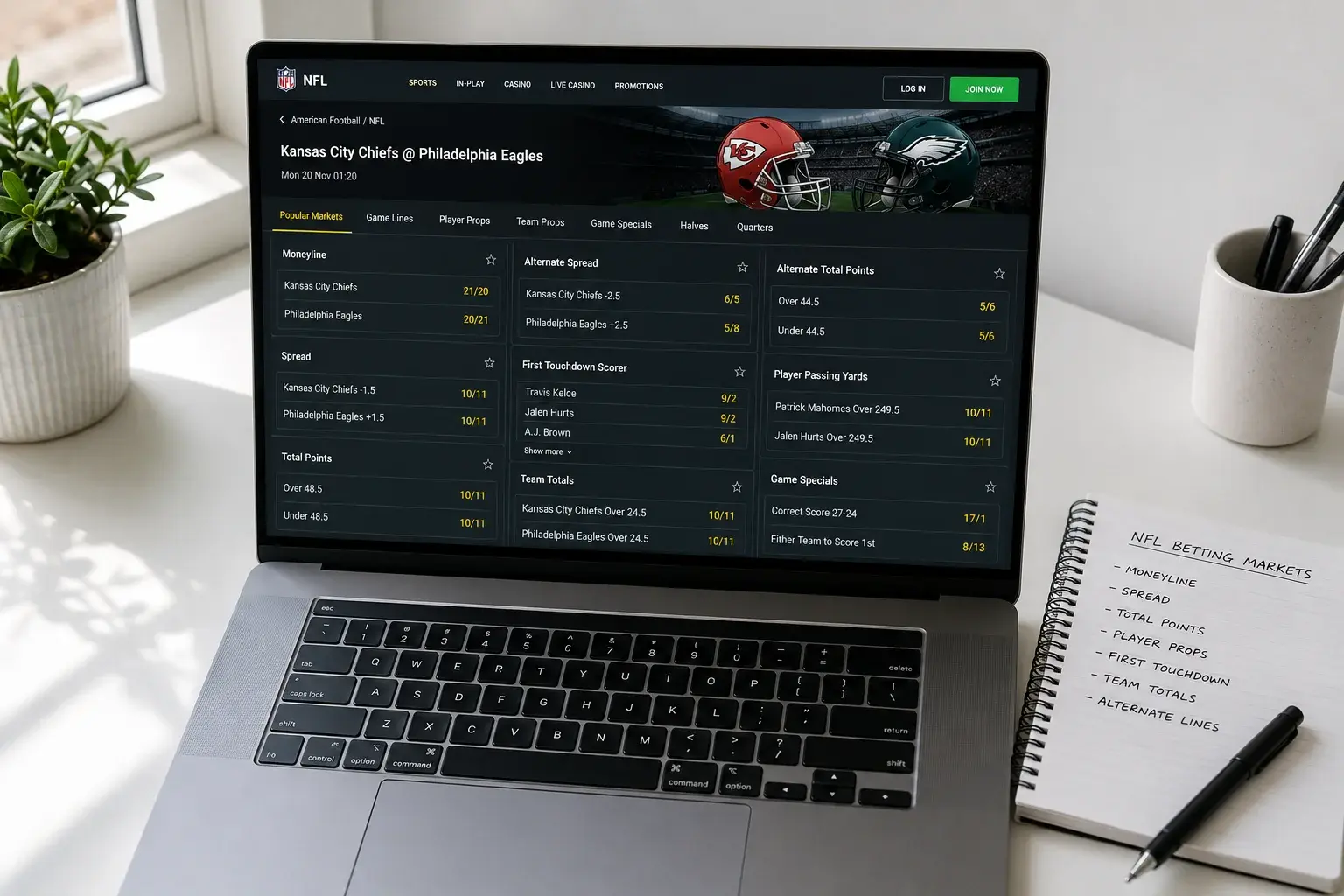
The core in-play markets mirror the pre-match staples: live spread (adjusted as the score changes), live moneyline and live total (over/under). These three reset continuously throughout the game and form the backbone of any live NFL betting strategy. Beyond them, you will find live quarter-by-quarter markets – who wins the current quarter, quarter totals, quarter handicaps – which reset at each period break. These are shorter-duration bets that suit punters who prefer fast resolution.
Next touchdown scorer markets appear and disappear rapidly depending on field position. When a team crosses midfield, the next-TD-scorer market opens with the usual suspects – the lead running back, the top wide receivers, the tight end. When they punt, it closes. This yo-yo availability is a feature of NFL live betting that does not exist in football or rugby, and it rewards attention. If you are not watching the game, you are guessing when these markets open, and guessing is not a strategy.
Drive-result markets – will the current possession end in a touchdown, a field goal, a punt or a turnover – are increasingly available at the larger UK operators. These micro-markets price the immediate situation rather than the overall game, and they require a different analytical lens. You are no longer asking “who wins by how much” but rather “what happens in the next three minutes given this field position, this down-and-distance and this offensive personnel group.” That granularity demands real-time information, which is why live betting and live viewing are effectively inseparable in NFL wagering.
Player prop markets – rushing yards for a running back, passing yards for a quarterback – sometimes remain live through the first half before closing at half-time. The pricing on live player props is typically wider than pre-match because the bookmaker’s model has less historical data to work with in real time. Wider margins mean less value per bet, but they also mean more volatility in the price, and volatility creates occasional opportunities for anyone paying close attention.
Market depth varies significantly by fixture. A Sunday Night Football primetime game between two playoff contenders might carry 50+ live markets at a major UK operator, while a Thursday night game between two rebuilding teams might offer fewer than 20. The London fixtures tend to receive enhanced in-play coverage because UK operators know their customer base is watching – more eyeballs mean more bets, which justifies the cost of maintaining additional live markets. If you are selective about which games you trade in-play, prioritising marquee fixtures and London games will give you more markets, tighter pricing and better liquidity.
How NFL Odds Shift Drive-by-Drive
NFL odds do not glide – they lurch. A single play can shift the live spread by three or four points because every yard, every turnover, every penalty changes the expected scoring trajectory. Understanding the rhythm of those lurches is what separates someone placing informed live bets from someone reacting emotionally to what they just saw on screen.
The biggest single-play price swings come from turnovers in opponent territory. An interception returned to the 20-yard line instantly shifts the expected points for the next possession from roughly zero (defence on the field) to something between three and six (offence in scoring range). The live spread adjusts before most viewers have processed the replay. If you want to bet the team that just threw the interception at a more favourable spread, you have seconds – not minutes – to act.
Half-time is the most predictable repricing window. The live market pauses, the bookmaker’s model recalculates based on first-half data, and new second-half lines are posted. Second-half spreads and totals are effectively standalone bets on a truncated game, and they reset many of the biases that accumulate during live first-half trading. I find second-half markets particularly useful when a game has not played out as the pre-match line suggested – if a heavy favourite is trailing at the break, the second-half spread often overreacts, offering value on the side that was always the better team.
Garbage time – the final minutes of a game whose outcome is already decided – warps live odds in ways that catch inattentive punters. A trailing team down by 20 with four minutes left will often score one or two meaningless touchdowns against a prevent defence. Those late scores move the live total and can make the closing spread look tighter than the game actually was. If you are trading live totals, understanding when a game has entered garbage time is essential. The scoring is real, but the competitive context is not.
Streaming Access: What You Need to Know for Live NFL Betting
In 2025, more than six million people watched the NFL London games on television or online – a viewership record for the international series. That number reflects how accessible NFL coverage has become in the UK, and for live bettors, access to a real-time picture of the game is not optional. Betting blind on NFL in-play markets is like day-trading stocks without a price chart: technically possible, practically reckless.
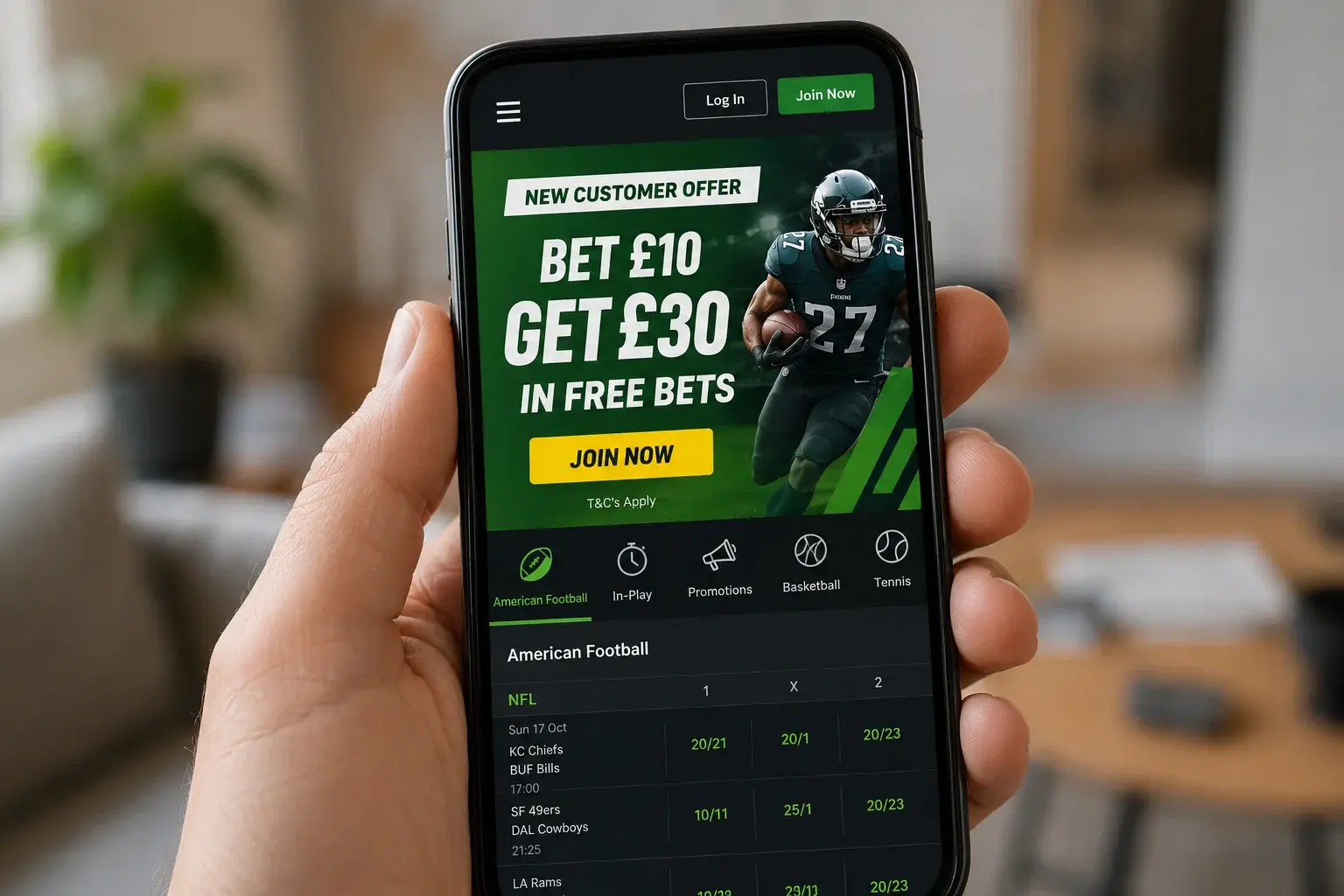
Several UK bookmakers offer in-app NFL streaming for selected fixtures, typically requiring a funded account or a recently placed bet. The coverage varies by operator and by broadcasting rights – not every game is available, and the quality ranges from stable HD to grainy, buffering disappointment. The 18-24 age bracket uses mobile phones for gambling at a rate of 76%, which means the streaming experience on a five-inch screen matters as much as the desktop version. For a fuller breakdown of which platforms stream and what the access requirements look like, I have put together a dedicated guide on NFL live streaming at UK betting sites.
The critical thing to know is this: every bookmaker’s in-app stream carries a delay, typically between five and thirty seconds behind the live broadcast. That delay is the bookmaker’s edge in live markets. They see the play before you do, and the price adjusts before your stream shows you what happened. I never rely solely on a bookmaker’s stream for my live betting decisions. A secondary source – Sky Sports, NFL Game Pass, or even a real-time play-by-play text feed – can close that information gap enough to matter.
Key Timing Windows: Kickoff, Half-Time and Two-Minute Drill
Bill Miller, the head of the American Gaming Association, put it plainly when he said that fans have more ways than ever to responsibly engage with the game they love through legal sports betting. What he did not say – but what any experienced live bettor knows – is that engagement without timing discipline is just entertainment with a price tag.
The opening drive offers a unique live-betting window. Pre-match markets have priced in all available information, but the game has not yet generated any new data. The first possession reveals the opening offensive game plan: are they running the ball to control the clock, or throwing aggressively to exploit a defensive weakness? That first series of plays can confirm or contradict the pre-match thesis, and the live market is still feeling its way. I have found some of my best live entries in the first ten minutes of a game, when the market is adjusting to reality but has not yet fully incorporated it.
Half-time is the widest and most accessible window. The market pauses, second-half lines are posted, and you have fifteen minutes to assess what happened versus what was expected. Unlike the frantic in-play environment during live action, half-time gives you time to think – a luxury that live betting rarely offers. I treat the half-time break as a separate analytical session: review the first-half stats, compare them to the pre-match expectations, decide whether the second-half line has overreacted or underreacted, and place the bet before the third quarter begins.
The two-minute drill at the end of each half is the most volatile pricing window in NFL live betting. Trailing teams switch to a hurry-up offence, which compresses play frequency and accelerates scoring. The live spread can move by a full touchdown in under two minutes of game time. I generally avoid placing new bets during the two-minute drill unless I have a pre-identified scenario I am waiting for – say, a team that I expect to score before the half and then receive the second-half kickoff, giving them two consecutive possessions. That specific situation can create a significant swing in the live moneyline, and having it pre-planned means I can act quickly when it materialises.
Late fourth-quarter windows suit a particular type of live bettor: someone with a clear view of game state, clock management and timeout inventory. If a team trails by eight with three minutes left and two timeouts, they need a touchdown and a two-point conversion – a roughly 15-20% probability. The live moneyline at that point should reflect that probability, but emotional bettors often push the price higher than it should be on the trailing team, creating value on the leading side. Clock awareness is an analytical skill that very few casual NFL viewers possess, and it translates directly into live-betting edge.
Using Cash-Out on Live NFL Bets
Cash-out is the bookmaker’s way of offering you a deal before your bet has fully resolved, and like most deals, it favours the house. The cash-out value is not your bet’s “true” worth at that moment – it is the bookmaker’s price for taking the risk back onto their own book, with a margin baked in. I use cash-out, but I use it knowing that every time I press the button, I am paying a premium for certainty.
The situations where live cash-out makes rational sense are narrower than most punters think. If you placed a pre-match bet on an underdog and they are now leading by 14 in the third quarter, the cash-out offer will be substantial – but it will still be less than what you would collect if the bet wins outright. The question is whether the remaining risk (a second-half collapse, overtime, garbage-time scoring) justifies holding. I cash out when my assessment of the remaining risk has changed materially from when I placed the bet – not because the screen is flashing green.
Partial cash-out, offered by some UK operators, lets you lock in a portion of your profit while leaving a reduced stake running. This is a cleaner tool for live NFL betting because it allows you to de-risk without fully exiting. If I have a spread bet that has moved ten points in my favour, I might cash out 60-70% and let the rest ride. The maths is not perfect – the bookmaker’s margin applies to the partial amount too – but the psychological benefit of banking profit while maintaining exposure to upside is worth the small cost. Understanding when cashing out is and is not rational is one of the more nuanced skills in live NFL betting, and it comes down to comparing the cash-out offer against your own assessment of the remaining probability.
Latency, Bet Delays and Accepted-Price Traps
Here is something most bookmakers will not tell you upfront: when you tap “place bet” on a live NFL market, the bet does not execute instantly. There is a delay – typically three to ten seconds – during which the bookmaker checks whether the price has moved. If a touchdown was scored during that window, your bet is rejected or repriced. This is the accepted-price trap, and it works against you far more often than it works for you.
The delay exists for a legitimate reason: bookmakers need to protect themselves against bettors who have a faster information feed than the in-house pricing model. But the practical effect is asymmetric. When the price moves in the bookmaker’s favour during the delay, your bet is accepted at the new, worse price. When it moves in your favour, you get the price you requested or the bet is rejected and you have to resubmit. I have tested this pattern empirically over hundreds of live bets, and the asymmetry is real.
To mitigate it, I do three things. First, I avoid placing live bets during active plays – the seconds between a snap and the whistle are the highest-risk window for price rejection. Second, I use the “accept any price movement” toggle only when I am confident the likely movement is small and the original price already has enough margin to absorb it. Third, I place live bets during stoppages: timeouts, injury breaks, TV commercial windows. These pauses freeze the game state and reduce the chance of a mid-submission price swing. None of these eliminates latency risk entirely, but together they reduce the frequency of rejected bets and unfavourable repricing significantly.
Live Accumulators: Adding Legs as Games Unfold
The Sunday afternoon NFL slate in the UK starts at 6pm and runs until roughly midnight, with up to eight games overlapping. That window is tailor-made for live accumulators – adding legs to an in-running acca as games progress and your information picture sharpens.
The appeal is straightforward: instead of committing to a four-leg pre-match acca where all four selections must be right from kickoff, you build the accumulator sequentially, adding each leg only after you have seen enough live action to form a view. A team leading by 10 in the third quarter with a strong defence is a very different proposition than that same team was at kickoff. The live price reflects the current state, which means each leg you add is priced on better information than a pre-match selection would have been.
The danger is equally straightforward: overbuilding. Every additional leg multiplies both the potential payout and the probability of failure. A four-leg live acca where each selection has a 65% implied probability gives you a combined win probability of roughly 18%. That sounds reasonable until you realise that the bookmaker’s margin on each live leg is typically wider than pre-match, which means your 65% implied probability per leg might really be 60% in reality. Suddenly your 18% has dropped to 13%, and you are building a lottery ticket, not a betting strategy.
I build live accas with a maximum of three legs, and only when at least two of those legs come from games I am actively watching. The one NFL Sunday generates a handle that dwarfs entire weeks of other major sports, and that volume means the market is efficient. Beating it three times in an evening is ambitious. Beating it six times is fantasy. Keep the legs short, keep the stakes small, and treat live accumulators as the entertaining supplement to your core strategy – not the strategy itself.
Trading the Game, Not Just Watching It
Live NFL betting rewards preparation more than reflexes. The punters who profit over a full season are not the ones with the fastest thumbs – they are the ones who identified their entry points before the game started and waited for the market to deliver them. Pre-plan your live scenarios, set your stake limits before kickoff and resist the pull of every dramatic play demanding an immediate reaction. The game will always be more exciting than your spreadsheet. Your spreadsheet is what keeps you solvent. Reacting quickly to momentum shifts is easier when you wager through a premier NFL betting hub with responsive software.