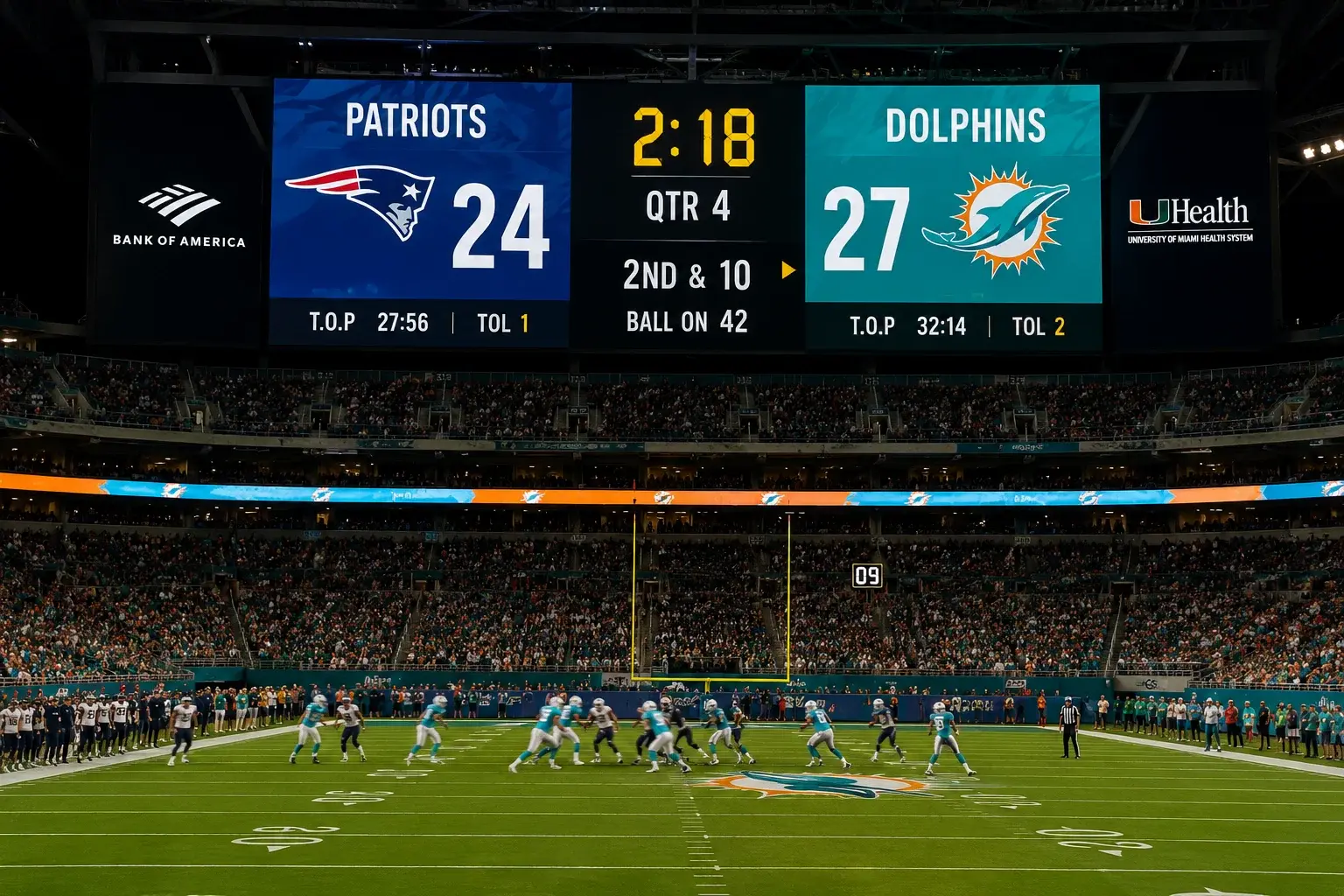

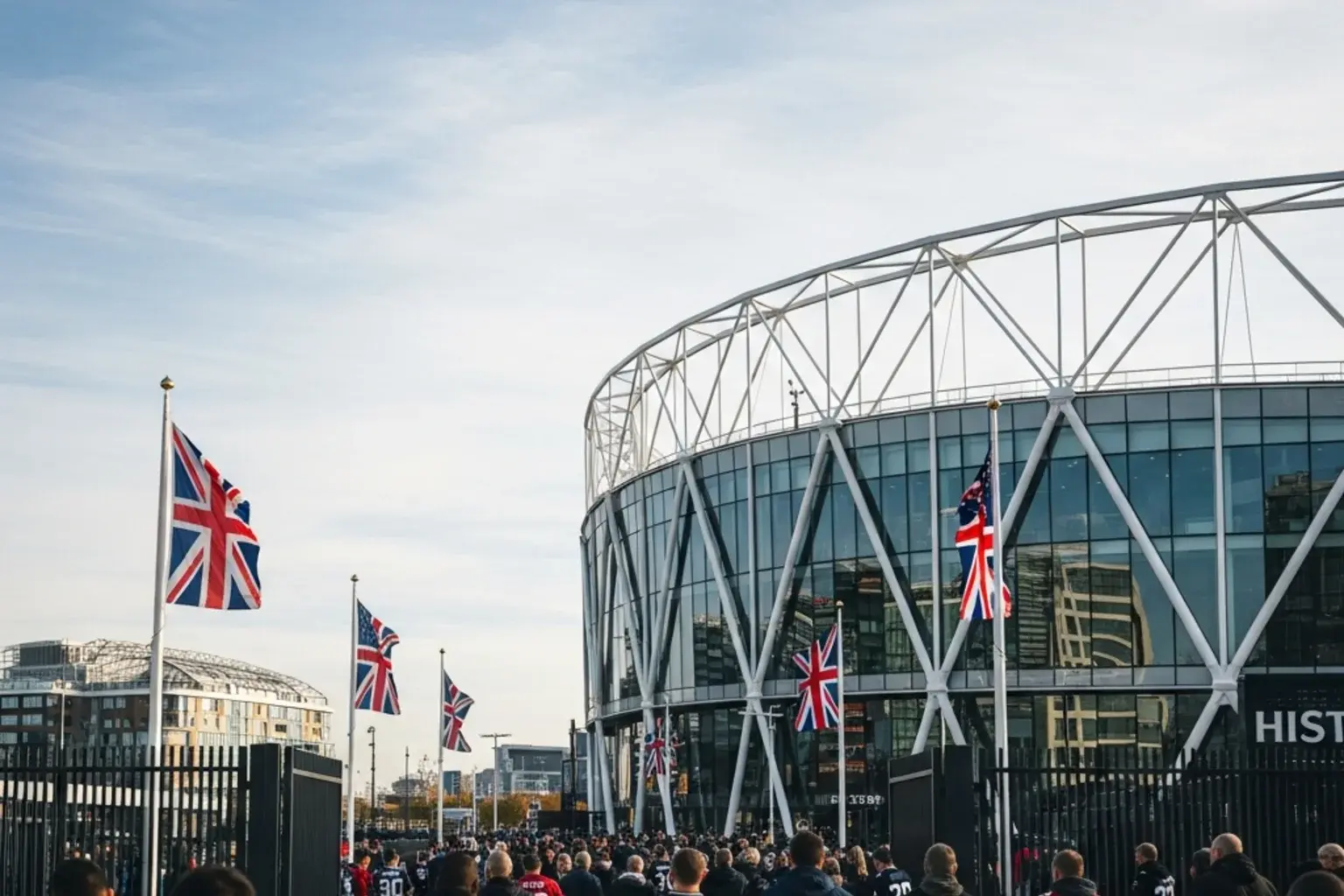
I was sitting in the upper tier at Tottenham Hotspur Stadium for a London game when the team I had backed to cover the spread started sleepwalking through the first quarter. They had flown in on Tuesday, held a couple of light practice sessions at a local facility, and looked like they were still running on east-coast body clocks. By the second quarter they had woken up, pulled level, and eventually covered by a field goal. The bet won, but the first-quarter panic reminded me that London games introduce variables you simply do not encounter in domestic NFL fixtures — and those variables create betting angles that the market does not always price correctly.
The UK has hosted 39 or more regular-season NFL games since the international series began in 2007, and the series continues to grow. Henry Hodgson, General Manager of NFL UK and Ireland, has described Tottenham Hotspur Stadium as arguably one of the top five stadiums in the NFL, regardless of where it is located — a statement that reflects how seriously the league takes its London commitment. For UK punters, these games are not just a chance to watch live NFL football; they are a unique betting proposition with dynamics that do not exist anywhere else on the schedule.
NFL London Odds: Betting Angles for UK Fixtures
The most significant variable in London game betting is travel. Every team playing in London has crossed the Atlantic, adjusted to a time difference of five to eight hours depending on their home city, and disrupted their normal weekly preparation routine. The NFL ran a record seven international games during the 2025 season, and the data from these fixtures — along with the decade-plus history of London games — suggests that travel fatigue is real but inconsistent.
West-coast teams face the toughest adjustment. A team flying from Los Angeles or Seattle loses eight hours crossing eastward to London, and the impact on circadian rhythms is well documented in sleep-science research. East-coast teams — New York, Miami, Jacksonville — have a shorter five-hour shift, which is physiologically easier to manage. Some bookmakers appear to factor this into their opening lines, but not all of them do, and when they do the adjustment is often conservative.
The strategic question for bettors is whether the market fully prices in the travel effect. My experience says it usually underprices it for west-coast teams, particularly in the first half. If you can find a live-betting angle on the first quarter or first half — before the players’ bodies fully adjust — there may be value in fading the west-coast team early. NFL betting strategy built around schedule-based factors is especially relevant here, because London games represent the most extreme version of travel impact anywhere on the NFL calendar.
Teams that choose to arrive early — flying in on Monday or Tuesday for a Sunday game — tend to perform better than teams that arrive mid-week. The NFL encourages early travel, and some franchises have embraced it more enthusiastically than others. Checking a team’s travel schedule in the week before a London fixture is one of the simplest research steps you can take, and it is information that is publicly available through team beat reporters.
Venue Effects: Wembley vs Tottenham Hotspur Stadium
London’s two NFL venues play very differently, and the differences can affect betting outcomes. Wembley is an enclosed stadium with a partial roof that shields the pitch from the worst of British autumn weather. Capacity sits around 86,000, making it one of the largest venues any NFL game is played in. The atmosphere is enormous but dispersed — sound does not concentrate the way it does in purpose-built NFL stadiums with steeper bowl designs.
Tottenham Hotspur Stadium, by contrast, was designed with NFL in mind. Its retractable grass pitch reveals a synthetic NFL surface underneath, and the stadium’s steeper, tighter bowl creates a significantly louder and more intense atmosphere than Wembley. Attendance at London games has ranged from 60,000 to over 86,000 depending on the venue, and the per-seat noise generation at Tottenham is noticeably higher.
Why does this matter for betting? Crowd noise affects communication. NFL offences rely heavily on pre-snap audibles — the quarterback calling changes at the line of scrimmage based on the defensive alignment. In a louder venue, visiting offences (which, in London, means both teams are effectively visitors) struggle more with audibles, which can increase false starts, delay-of-game penalties, and miscommunications. If you are looking at penalty-related prop markets or expecting a slightly sloppier game than the talent level suggests, the venue is a relevant factor.
Neutral Crowds and Home-Field Advantage Erosion
One of the most distinctive features of London games from a betting perspective is the absence of a genuine home crowd. In domestic NFL games, home-field advantage is a measurable factor — historically worth about 2.5 to 3 points in the spread, though this figure has been declining in recent years. In London, neither team has a home crowd in the traditional sense.
UK-based sports marketing consultant Jamie Reynolds has observed that British fans are less tribal than American ones, with team loyalties often driven by a franchise’s global profile, its appearances on Sky Sports, and the emotional experience of attending those early Wembley or Tottenham games. The result is that London crowds tend to be split fairly evenly or skewed toward whichever team has a larger UK following, which does not necessarily correlate with which team is “home” on the schedule.
For bettors, the practical implication is that you should discount home-field advantage more heavily for London games than for any other NFL fixture. If the spread is set based on standard home-field models, and those models assign two or three points to the designated “home” team, there may be value on the other side. London games are as close to a neutral-site contest as the regular season offers, and the spread should reflect that.
The one exception is Jacksonville, which was designated as the “home” team for London games for several consecutive years and built a genuine UK fanbase as a result. If Jacksonville plays in London, the crowd dynamic is slightly less neutral than for other matchups.
Market Depth and Enhanced Odds for London Fixtures
London games receive premium treatment from UK bookmakers in terms of market depth and promotional offers. Because these are the only NFL games kicking off at UK-friendly times — typically 14:30 BST for the early game and 18:00 BST for the late game — they attract significantly higher UK betting volumes than regular-season games starting at 18:00 or 21:25 GMT.
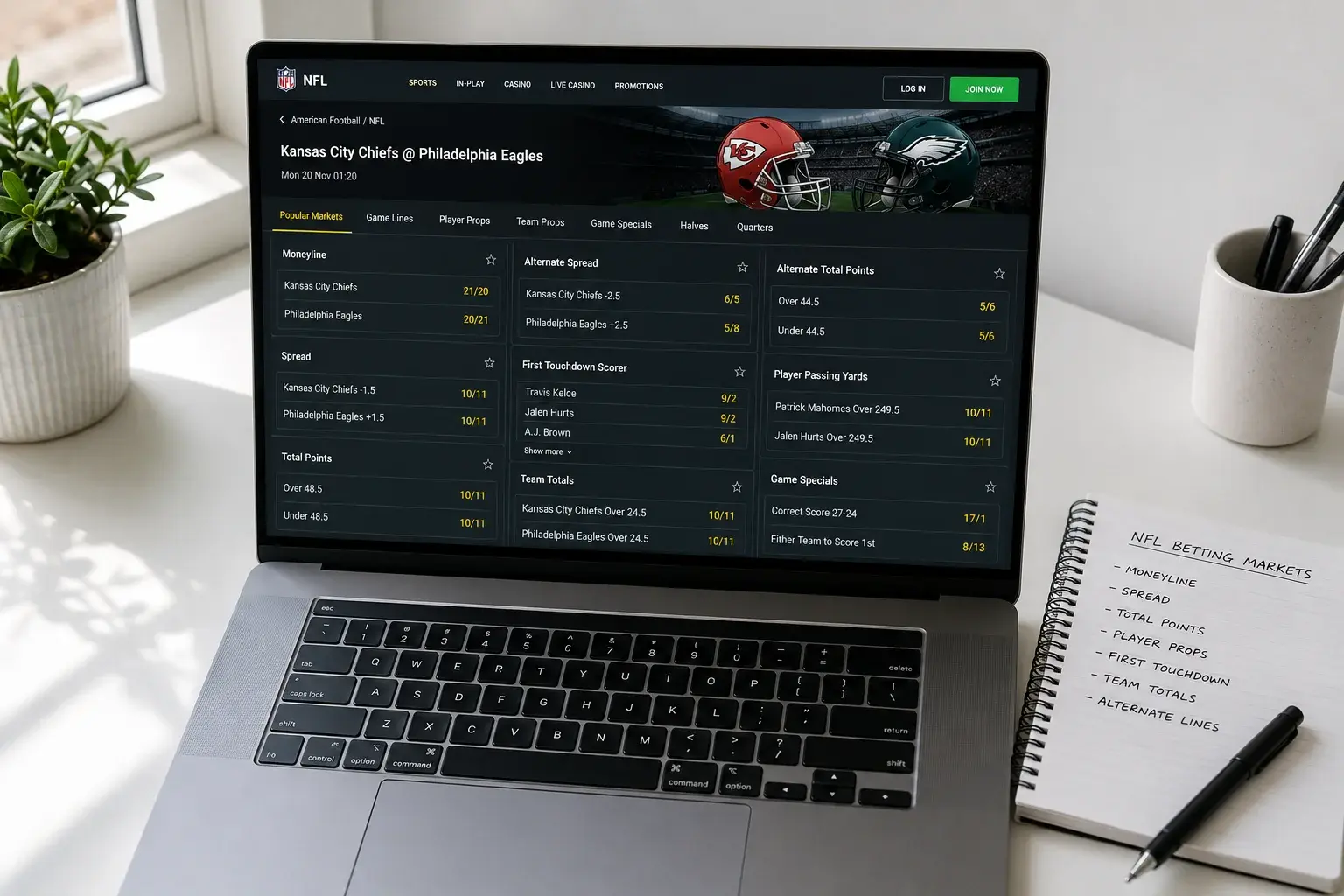
Over six million people watched the London NFL games on TV or online in 2025 — a record for the series — and that viewership translates directly into betting activity. Bookmakers respond by expanding the available markets, often offering 200 or more on a single London game compared to 80-150 for a standard regular-season fixture. Player prop availability is broader, novelty markets appear, and bet-builder selections are more extensive.
Enhanced odds and promotional offers also spike for London games. Operators use these fixtures as customer-acquisition tools, offering boosted prices on London-specific markets (first touchdown scorer at Tottenham, team to lead at half-time) that would not exist for the same matchup if it were played in the United States. From a value perspective, these promotions deserve the same scrutiny you would give any other enhanced-odds offer — check the terms, check the cap on stakes, and check whether the enhanced price actually represents positive expected value or just a flashy headline number.