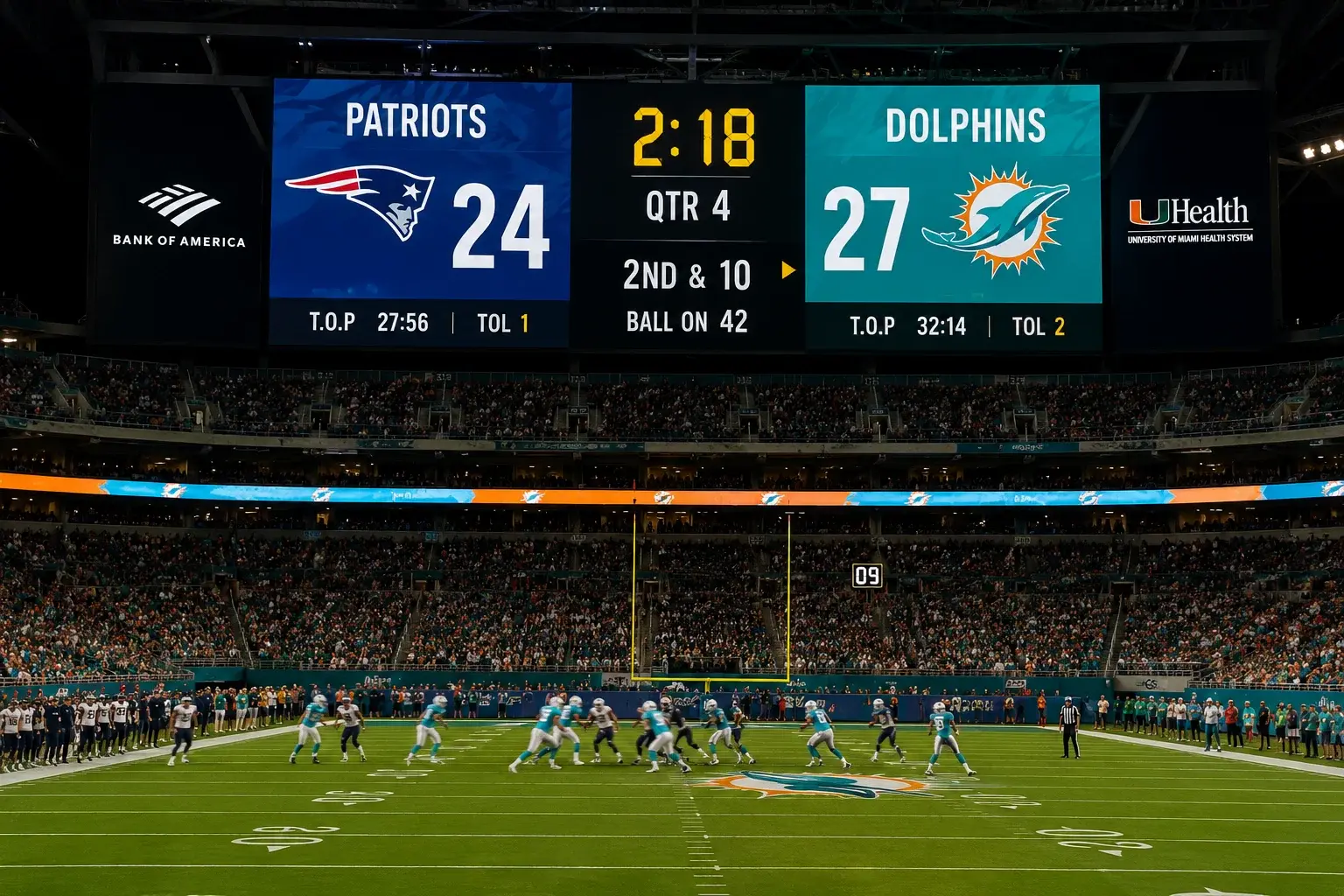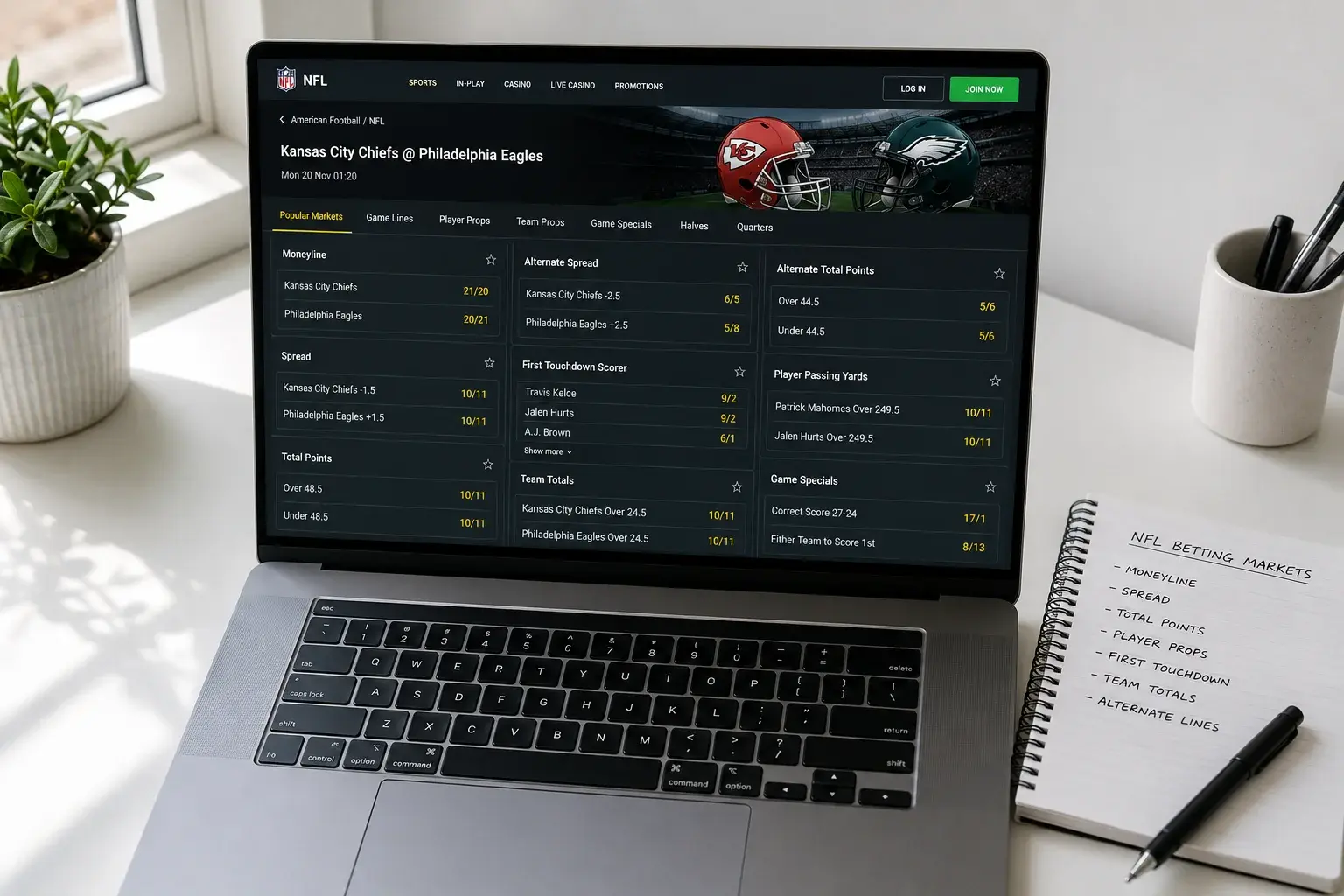


Monday Night Football kicked off at 01:15 UK time, and I was sitting in bed with my phone, half-asleep, trying to decide whether to take the live under at 42.5 after a scoreless first quarter. I placed the bet, set an alarm for the morning, and woke up to find the game had finished 13-10 and the under had hit comfortably. That is primetime NFL betting from the UK in a nutshell: the games are excellent, the betting angles are real, and the scheduling means you are making decisions at hours when your judgment may not be at its sharpest.
Primetime NFL games — Thursday Night Football, Sunday Night Football and Monday Night Football — are the league’s showcase fixtures. They feature the best matchups, attract the highest viewership, and generate a disproportionate share of betting volume. NFL consistently commands the largest share of handle among all sports in regulated US markets, and a single primetime game routinely produces more betting volume than entire weeks of MLB or NBA action. For UK punters, primetime games carry both opportunity and risk — the opportunity of sharper analysis on high-profile matchups and the risk of impaired decision-making due to late-night scheduling.
Thursday Night Football: Leveraging Short Weeks for Top Odds
Thursday Night Football is the most analytically interesting primetime slot because of the short week. Both teams are playing on three days less rest than a standard Sunday-to-Sunday schedule, which compresses preparation time, limits recovery from injuries sustained the previous Sunday, and generally produces sloppier football.
The data on Thursday Night Football scoring is consistent: these games tend to be lower-scoring than the league average, with more turnovers and fewer big plays. The compressed preparation means offences have less time to game-plan for the opposing defence, which benefits defensive units that can rely on base schemes and physical play. If you are looking for a structural edge, the under on Thursday night games has historically been the more profitable side — not dramatically so, but enough to warrant attention if the total is set at a number consistent with a normal-rest game.
The short week also affects line movement. Because both teams are dealing with the same compressed schedule, the spread is not directly influenced by the short week in the way it would be if only one team had less rest. But the injury report is disproportionately important on Thursdays: a player listed as questionable on a normal week might have five days to recover and play; on a short week, the same player is more likely to miss the game. The Wednesday injury report for Thursday games carries more weight than for any other game of the week.
For UK bettors, Thursday night kicks off at 01:20 BST — deep into the small hours. If you are going to bet on Thursday night games, place your bets pre-match rather than staying up for in-play. The analytical work can be done during the day; there is no need to be awake at 3:00 AM to watch the fourth quarter.
Monday Night Football: Late Start, Late-Breaking Information
Monday Night Football kicks off at 01:15 BST (20:15 Eastern), making it the latest regular kickoff for UK bettors. The scheduling creates a unique information advantage: by Monday night, you have seen every other game of that week play out. Injuries sustained on Sunday, unexpected results that affect playoff positioning, and performance trends that were not visible before kickoff are all available to inform your Monday night analysis.
The line for Monday Night Football is set by Tuesday of the preceding week, and it moves throughout the week based on the same factors as any other game. But the final wave of line movement — from Sunday evening to Monday kickoff — is often sharper because it incorporates information from the Sunday games. If a team’s division rival won unexpectedly on Sunday, shifting the Monday team’s playoff calculus, the motivation factor can be visible in both the spread movement and the way the game unfolds.
For UK bettors, Monday night presents the same late-hour challenge as Thursday. I handle it the same way: complete my analysis during the day, place pre-match bets by early evening, and only stay up for in-play if I have a specific live-betting plan tied to a game scenario I expect to unfold. The worst Monday night habit is staying awake on a whim and placing bets out of boredom during a one-sided game — garbage-time betting at 3:00 AM is the enemy of every disciplined bankroll.
UK Kick-Off Times and Their Effect on Live Betting
The timing of NFL games from a UK perspective is the single biggest structural difference between betting on the NFL and betting on domestic UK sports. The early Sunday slate kicks off at 18:00 GMT, which is manageable. The late afternoon games start at 21:25 GMT. Primetime games start between 01:15 and 01:20 BST. The Super Bowl kicks off around 23:30 GMT.
An estimated 95% of UK online gambling occurs from home, and within the 18-24 age group, 76% of that activity happens on mobile phones. For NFL live betting, this means the typical UK bettor is on a phone, at home, late at night — an environment that is comfortable but also conducive to impulsive decisions. The absence of a social setting (you are not at a pub watching with friends who might talk you out of a bad bet) and the fatigue of late-hour viewing both work against disciplined in-play wagering.
My practical framework for managing NFL timing across the season: treat the early Sunday slate (18:00 GMT) as my primary betting window, where I am alert, focused, and have time to watch multiple games. The late afternoon and Sunday Night Football are secondary — I will bet pre-match but am more selective about staying up for in-play. Thursday and Monday nights are pre-match only unless I have a specific, pre-planned live-betting strategy. The Super Bowl is the one exception where staying up all night is part of the occasion, but even then, I set a hard limit on my in-play activity before kickoff.